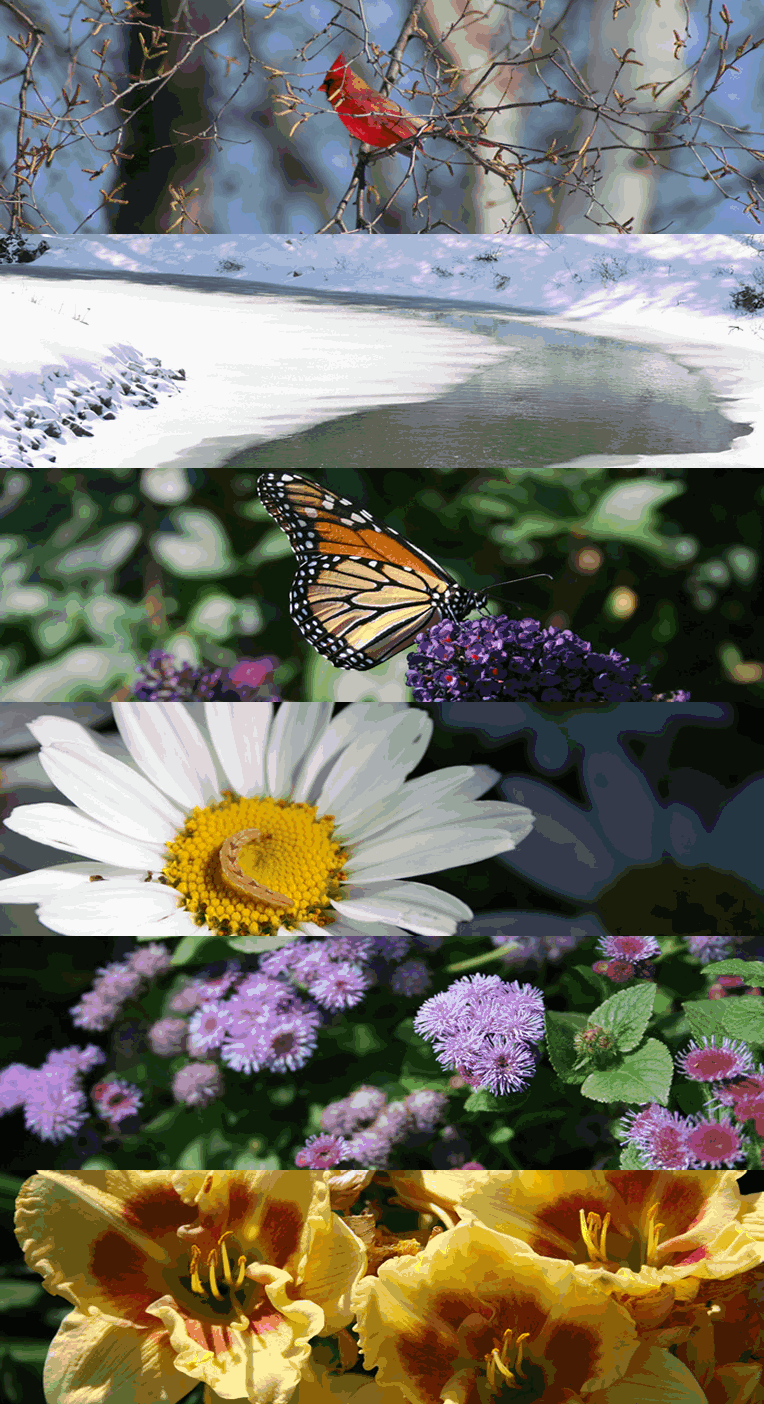
Pollinator stations for small spaces
There is no strict definition for a pollinator station, so for the purpose of this website, I will define it as a compact area where a large amount of resources is provided for pollinators. By compact, I mean something that might fit on a patio or large balcony.
| |
 |
|
| |
This pollinator station contains the following plants: Zinnia and Tithonia to provide a long continuous source of necar. Golden alexanders, Ohio spiderwort, Long leaved bluets, wild calamint, liatris ligulistylis and Symphyotrichum laeve are the native perennials that each flower for a few weeks over the course of the sping, summer and fall. |
|
As the human population rises, more people are living in smaller spaces and urbanised areas are expanding. The way we live has a powerful effect on the lives of other animals. Some mammals such as mice, rats, raccoons, foxes and coyotes survive surprising well in urban areas as the net primary productivity is increased by human waste. Unfortunately, pollinators are in a state of decline. We can mitigate these ecological changes by setting up pollinator stations.
Greenleaf et al, (2007) summarised distances that bees travel from their nest to foraging sites. For many bees, the proximity to the nest is less than 500 metres. While butterflies are looking for host plants on which to lay their eggs, they are not pinned down to a particular location by a nesting site since butterflies do not invest resources into raising their offspring. Solitary wasps tend to stay even closer to home because they can only carry large prey items short distances back to the nest. Some wasps are known to walk with their prey a few hundred metres, which is in itself an incredible feat given that the prey can be bigger than the predator.
These numbers illustrate the importance of having numerous pollinator stations in urban areas that are reasonably close to each other to get a continuous pollination corridor. The distance between stations could be as much as two or three hundred metres, but wouldn't it be nice to have 10 gardens in a row that provided pollinators with their needs?
Do not worry if you think that you are the only one in your area that has a pollinator station. The isolation will not prevent pollinators from visiting. Butterflies will come because there are less restrictions on where they fly; bumblebees will visit because they can travel long distances to reach foraging sites that are nectar rich; and many other solitary bees will still visit because they prioritise finding food resources before finding a nesting site.
I set up a garden in the downtown core in Toronto. The garden was small, being less than 15 feet across. In my case, I removed all the grass and converted it into a designed wild space. It was the only garden on the street to get monarch butterflies and hummingbirds. Other wildlife gardeners keep some grass or paving stones on their small plot for aesthetics, but use native plants almost exclusively and to great effect in order to attract pollinators.
| |
 |
|
| |
Monarch butterflies visiting Liatris ligustylis at a pollinator station. |
|
If you have a patio, then you will be relying on planting in containers. I designed a such a station using only containers to test out how someone living in a small space could attract pollinators, I decided to mix some native perennials with non-native annuals. I chose Zinnia and Mexican sunflower for their height and the large size of the flowerheads, which are enticing to insects of all sizes. I was also looking for plants that would provide nectar for a large part of the season and these flowers, once they first appear, keep blooming until almost the end of the season. There is no reason why you could not choose a native annual. My favourite for this purpose would be Gaillardia puella. I included some native perennials that flower in spring, including golden alexanders and spiderworts as well as an aster that flowered late into the fall. In addition to this, you could include a water bath and a hummingbird feeding station. A small water bath with exposed stones as landing pads is a great addition for bees that need water. This saves bees time and energy.
Choosing plants for a pollinator station
The challenge in setting up a pollinator station is to get the maximum impact from a relatively small number of plants. Here is a summary of the things you need to think about.
1) Choose plants that have long blooming periods or can be deadheaded for another bloom.
2) Choose some plants that produce copious and consistent quantities of nectar throughout the day. Consider coneflowers, milkweeds, Echinacea, Agastache, Penstemons, asters, goldenrods, and asters for this purpose. Support copious nectar producing flowers with plenty of sun exposure and regular watering. Many of these flowers also produce a lot of pollen. Other plants that produce a lot of pollen include Coreopsis, prairie smoke and sunflowers.
3) If you can, try to include a spring bloomer and a late-summer bloomer to help bees active in these months of the year.
4) If you are using containers, choose plants that will grow well in the soil provided and within the confined space.
5) Try to include a plant with large open flowerheads because they have accessible nectaries. The large flowers are a big advertisement for insects and provide a decent landing pad for a wide range of insects.
6) Use vertical space efficiently by putting taller plants in the centre or against walls.
7) Avoid choosing too many different plants. One small individual plant will not make a journey worth it for a bee. Clusters of the same plant allow for more efficient nectar foraging.
6) Choose your own plants for a pollinator station because if we all follow the same formula, there will no plant diversity.
| |
 |
|
| |
A bumblebee visiting Tithonia at a pollinator station. |
|
The limitations of a pollinator station
Pollinator stations by their very nature do not have a high diversity of plants. They can support generalists, but not the bees that are pollen specialists. This problem can be overcome by having many different pollinator stations in the same locale.
Highly isolated pollinator stations in urban jungles will likely have a lower number of pollinators, but you have to start somewhere and you may well be able to persuade some of your neighbours to follow suit after they see the results you are getting. Advertise your pollinator station with a small sign.
Pollinator stations become less effective with height because of the energetic cost of gaining altitude and flying in windy conditions makes the reward less enticing. You may need to adjust you plant choice to allow for higher levels of desiccation, but it still may be worth having a go to see what happens. Between 5-10 stories, there is a decline in pollinator activity.
If your plants die, natural replacement may lead to plant in-breeding with lower levels of nectar or pollination production. Be prepared to replace some of your plants with newly purchased specimens to maintain genetic diversity.
It is hard to put in writing the joy one feels when sitting on a patio and spying directly on the bees or the butterflies or the antics of hummingbirds. You can be downtown, in suburbia or in a country home and experience the same when you set up a pollinator station.
Reference: Greenleaf, S. S., Williams, N. M., Winfree, R., & Kremen, C. (2007). Bee foraging ranges and their relationship to body size. Oecologia, 153(3), 589–596.